


“How much allowance should I give my child?” is one of the most searched parenting questions today. Should you give a dollar for every year of age? That's an old rule that hasn't kept up with what things actually cost today in 2026. So instead of just guessing, we looked at our data.
We looked at anonymized allowance data from 9,135 U.S. families who set up a new allowance on Till in 2025 and 2026. What we found is that there is no single right answer, but there are some patterns that can help you figure out what makes sense for your family. The right amount depends on a mix of age, location, level of financial independence, and more.
Average Allowance by Age in 2026
Allowance tends to increase as kids get older, which makes sense. Older kids have more independence and usually have more things to spend money on; they take on more expenses. The biggest jump in our data happens between ages 13 and 15, when most kids start spending more on their own, like getting food with friends, online purchases, clothing, and transportation.
Here's what families on Till are paying for allowances in 2025 and 2026:
- Age 10: $7–$10 per week, monthly average $35
- Age 11: $8–$12 per week, monthly average $40
- Age 12: $10–$15 per week, monthly average $50
- Age 13: $12–$18 per week, monthly average $60
- Age 14: $15–$20 per week, monthly average $75
- Age 15: $18–$25 per week, monthly average $90
- Age 16: $20–$35 per week, monthly average $110
- Age 17: $25–$45 per week, monthly average $140
- Age 18: $30–$50 per week, monthly average $160
Across all U.S. families on Till in 2025 and 2026, the average weekly allowance was $17, though the median was $10 - this gap means that a small number of families give their kids much higher allowance than the average. For most families, $10 is a more realistic average benchmark than $17. Use these ranges as a starting point. They're based on real families, but every family is unique.
.webp)
Factors that might impact the “right” allowance amount
There is no right amount but these factors will likely influence the allowance amount you give to your kids:
- Cost of living: A teen in New York City will likely need more to cover basic expenses than a teen in a smaller, more rural town.
- Socioeconomic status & values: The allowance amount you choose should be sustainable and realistic for your household budget.
- Level of independence: Are they just buying candy or are they also responsible for gas and clothing? Allowance amounts should increase as the amount of independence and responsibility increases.
- Your teaching goals: Whether you want your kids to learn more about budgeting or connecting work ethic to income, the structure and consistency often matters more than the dollar amount
Why timing matters: Weekly vs Monthly Allowance
Our 2025 & 2026 data shows that 72% of parents choose a weekly allowance schedule for their kids.
- Weekly allowance: A weekly allowance is often better for younger kids as it creates faster feedback loops and feels more manageable.
- Monthly allowance: A monthly allowance more closely mimics a paycheck. It encourages older teens to think ahead and to make longer-term financial decisions.
Common questions: Allowance by Age
- How much allowance should a 10-year-old get?
- Most 10-year-olds receive between $7–$10 per week. At this age, allowance is a tool to teach basic budgeting skills, to help kids save towards small goals, and begins to teach the difference between wants and needs.
- How much allowance should a 13-year-old get?
- The typical range for a 13-year-old is between $12-$18 per week. This is the age where kids begin to transition into more independent spending, like buying snacks with friends or making small online purchases.
- How much allowance should a 16-year-old get?
- Most 16-year-olds receive $20-$35 per week. At this stage, allowance often starts to cover bigger expenses like gas, subscriptions, and social outings. Some teens have part-time jobs which can influence how allowance fits into the picture.
- What is the average allowance amount for teenagers?
- Teenagers (ages 14 to 18) typically receive between $15-$30 per week, depending on what expenses they’re responsible for. As teens get older and gain independence, allowance often increases significantly.
- What is the average allowance amount for middle schoolers?
- Most middle schoolers (ages 11 to 13) typically receive between $8-$15 per week. At this stage, kids are starting to spend more during social outings - grabbing food with friends, making small online purchases, or school-related expenses.
Final thoughts: What's the Right Allowance Amount?
The average weekly allowance across the U.S. families on Till in 2025 and 2026 was $17 but the median was $10, showing that families make very different choices. Allowance is about teaching financial literacy, creating opportunities for real-world decision making, and building independence. We urge parents to use all of this data as a starting point, not a rulebook. Make the decision that’s best for you and your family.
Automating Allowance with Till Financial
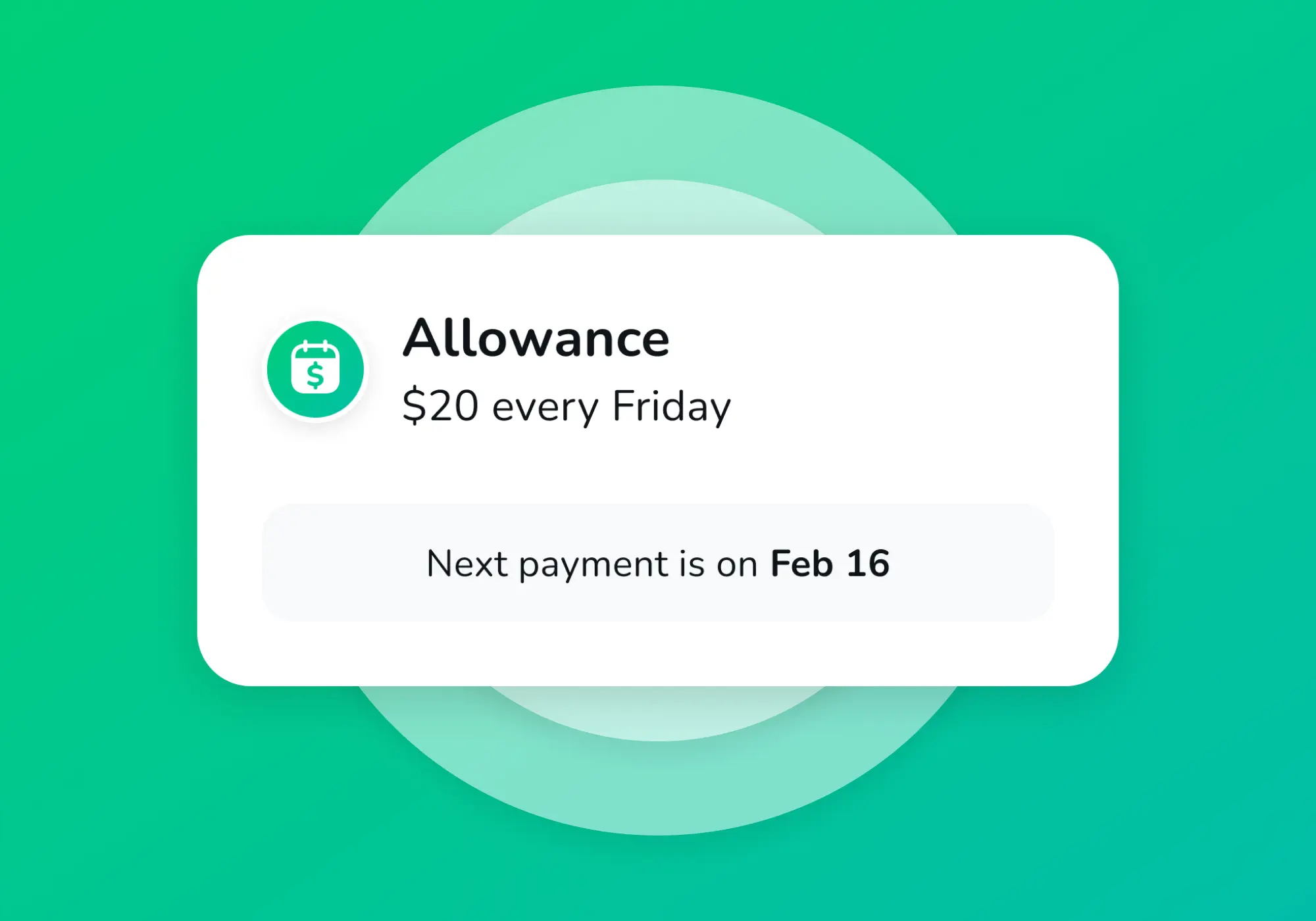
Many families choose to automate allowance to make the process more consistent and predictable. Till Financial, a family banking app and debit card for kids and teens, allows parents to set up an automated allowance that gets sent directly to a kid’s debit card.
- Schedule weekly or monthly allowance transfers
- Parents can skip or pause an allowance at any time
- Assign tasks and chores and release payments only when they are completed
- Track how and when kids are spending their money
Ready to set up your first automated allowance? Get started with Till today.
